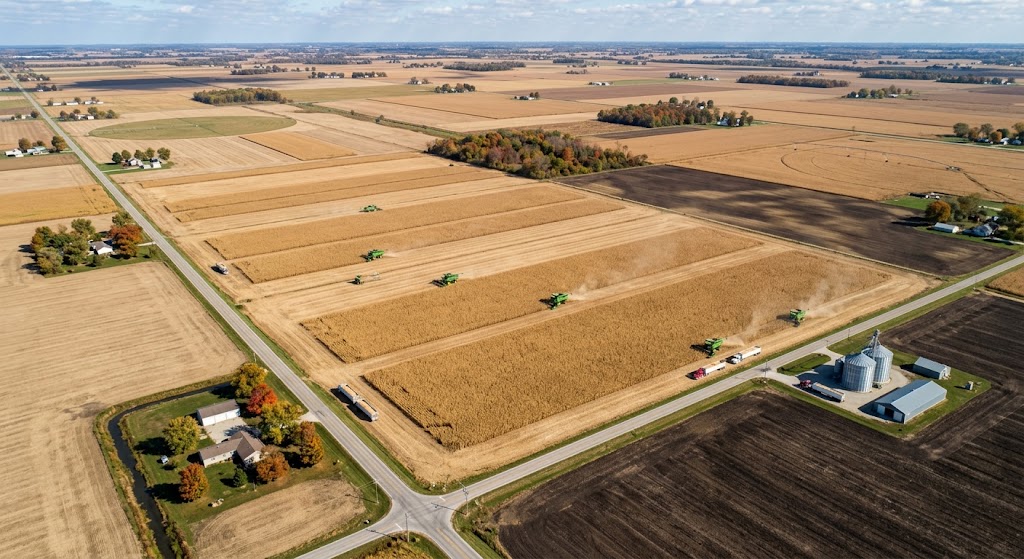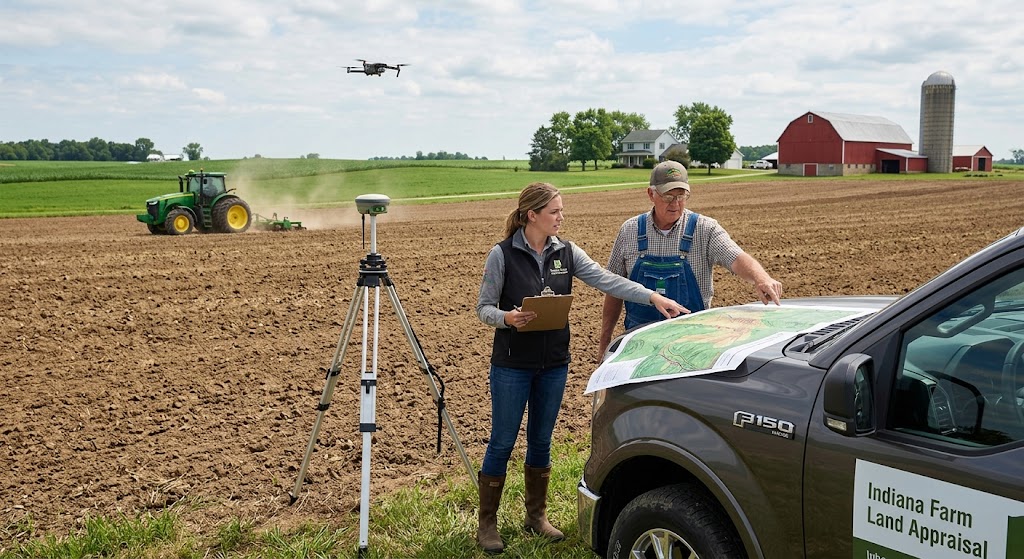

Buying farm land in Indiana means evaluating WAPI soil scores, drainage, CRP terms, and water rights, not just price per acre.
By John Downey, Certified Appraiser & Top Realtor
Most real estate agents can tell you what a farm sold for. I can tell you why — and whether the next one is worth what someone's asking. Eighteen years as an Indiana Certified Appraiser means I don't just list farm ground, I know how to read it: the soil, the drainage, the contracts attached to it, and the difference between what a bank will lend against and what a buyer is willing to pay.
Why Buying Farm Land Isn't Like Buying a House
Two 80-acre parcels a half-mile apart can be worth wildly different amounts per acre depending on soil productivity, drainage, and what's attached to the land legally. Buyers who treat farm land like a bigger version of a residential purchase are the ones who overpay for weak ground or underpay for a tract with real upside nobody flagged for them.
Soil Quality and the WAPI Score
WAPI, the Weighted Average Productivity Index, is Indiana's preferred soil productivity metric, expressed in expected corn yield — bushels per acre under normal, non-irrigated management. Across Indiana, WAPI scores run from under 100 up to roughly 188 bushels per acre. The number that actually matters for pricing is price per WAPI point — Indiana farm managers were tracking roughly $88 per WAPI bushel-point on qualifying 2025 sales, up sharply from around $62 a decade ago.
Drainage and Tile Systems: The Hidden Value Driver
Most of the best-producing ground in Montgomery, Boone, and Tippecanoe counties has been tiled. You can't see tile from the road, and a lot of older tile systems on West Central Indiana farms are 40, 50, even 70 years old. Ask for any tile maps the seller has, and don't assume "no tile map" means "no tile."
CRP Contracts: What You're Actually Buying Into
If a parcel has acreage enrolled in the USDA's Conservation Reserve Program, you're buying into a contract, not just land — CRP pays landowners an annual rental rate to take environmentally sensitive acres out of production for 10 to 15 years. CRP contracts transfer with the land at closing.
Access Roads and Legal Access
Confirm the parcel has legal, recorded access — not just a gravel lane a neighbor has let people use for thirty years. Legal access and title issues on rural parcels come up alongside a lot of the same due-diligence questions I cover in What Actually Happens During a Home Inspection in West Central Indiana — well and septic in particular don't come with a standard inspection.
Water Rights in Indiana: What You Actually Own
Indiana follows regulated riparianism. If your land touches a stream, pond, or lake, you generally have the right to make reasonable use of that water. Any groundwater withdrawal facility capable of pumping more than 100,000 gallons a day has to be registered under the Water Resources Management Act.
Appraisal Value vs. Market Value — Why They Diverge on Farm Land
Market value is what a buyer is actually willing to pay right now. Appraisal value is what a professional appraisal — using sales-comparison and income-approach methodology — says the land is worth. This is the same reconciliation process I apply on residential listings — see Why Having a Certified Appraiser as Your REALTOR® Changes Everything for how that plays out on a home sale. If you're financing, your lender leans on the appraisal, not the asking price.
Where the Market Stands Right Now
Per Purdue University's most recent Farmland Values and Cash Rents Survey, statewide average-quality Indiana farmland reached $12,359 per acre in 2025, up 5.4% year-over-year, while top-quality ground averaged $14,826 per acre and recreational land jumped 18.0% to $9,542 per acre. Cash rents for 2026 are running $318/acre for top-quality land, $264/acre for average-quality, per Purdue's Center for Commercial Agriculture.
A Quick Checklist Before You Make an Offer
- Pull the WAPI score and calculate price per WAPI point against recent comparable sales
- Ask for tile maps, or confirm drainage condition directly if none exist
- Get full CRP contract terms and years remaining, if any acreage is enrolled
- Confirm recorded, legal access to every parcel
- Check well capacity and registration status if water use matters
- Ask whether you're pricing to market value or appraisal value
Let's Walk a Property Together
If you're relocating to the area and want the fuller picture beyond farm ground — neighborhoods, cost of living, commute times — my complete guide to moving to Crawfordsville covers that. Call or text me at (765) 230-6335 to talk through a specific property before you make an offer.
This guide reflects Indiana law and USDA/Purdue data as of mid-2026. It isn't legal, financial, or appraisal advice for any specific property.